Ocean Hammock Oceanfront: Choosing Condo vs Home
December 4, 2025
December 4, 2025
Trying to choose between an oceanfront condo and a single-family home in Ocean Hammock? You are not alone. Buyers here weigh budget, maintenance, insurance, rental potential, and lifestyle before they act. In this guide, you will see how these options differ on costs, risk, financing, resale, and day-to-day living so you can move forward with confidence. Let’s dive in.
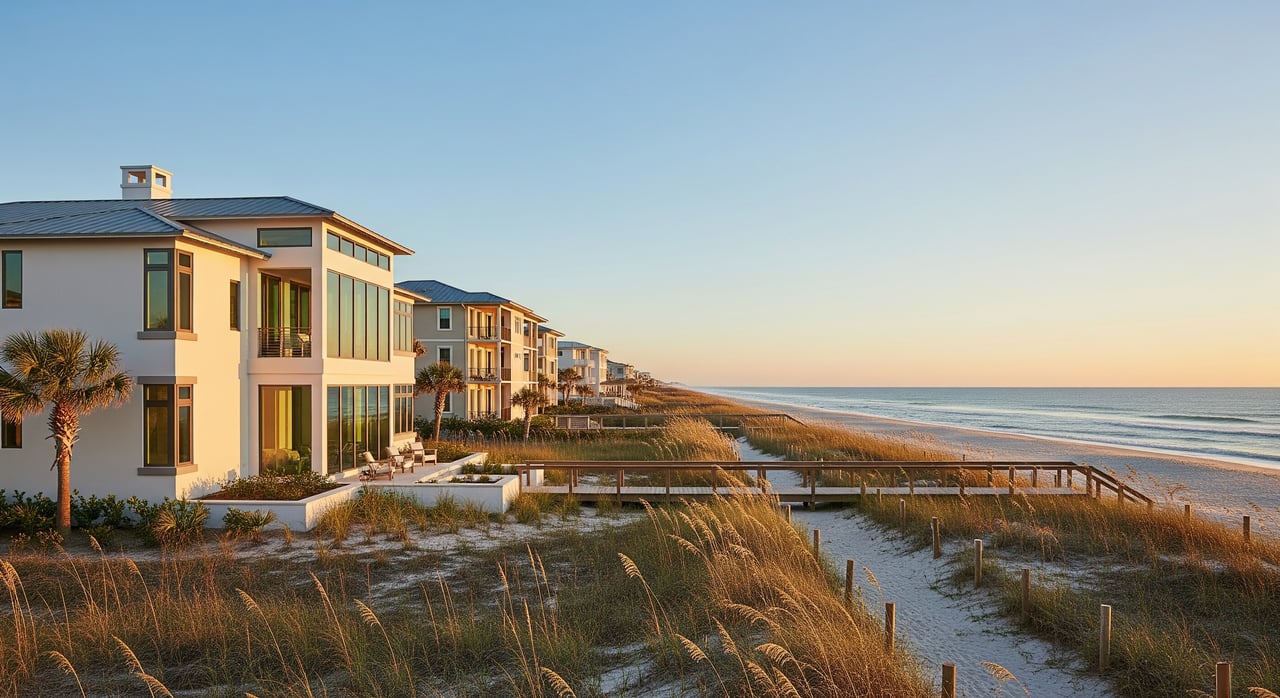
Ocean Hammock sits along Florida’s northeast Atlantic coast in the Palm Coast area of Flagler County. The community includes oceanfront condominium buildings and single-family homes near the beach along A1A. Here, coastal living also means planning for wind, storm surge, and salt-air wear. Understanding the HOA structure and property responsibilities is key before you choose your path.
Oceanfront single-family homes typically command higher overall prices than individual condo units because of land ownership and exclusivity. If you want exact ranges, review current comparable sales for Ocean Hammock through the local MLS and county records. A focused look at price per square foot, lot position, and view will clarify the premium for each property type.
Condo dues usually cover exterior maintenance, building insurance under a master policy, common-area upkeep, and shared amenities. Coastal buildings often carry higher dues to address elevated maintenance and insurance costs. Homes may have lower community HOA fees, but you are responsible for your own roof, exterior, landscaping, and any private dune or seawall work. Always request the current budget, reserve study, and ask about recent or pending special assessments.
As a condo owner, you typically carry an HO-6 policy for interiors and contents, while the association handles the master policy for the building. Clarify whether the master policy is walls-in or bare-walls, what it covers, and how deductibles are allocated. For a single-family home, you will secure a full homeowner policy plus windstorm and flood coverage as applicable. Premiums for oceanfront homes are often higher due to exposure and reconstruction costs, and flood insurance may be required if a lender sees the property in a Special Flood Hazard Area.
Condos shift many large capital projects to the association and reserves, which can simplify your day-to-day upkeep. Homes put every item on your list: roof, exterior finishes, corrosion control, HVAC, pest control, and hardscape. Salt air accelerates wear on metal components, mechanical systems, and exterior coatings, so plan for more frequent service and replacements on homes directly exposed to the coast. The right inspection and a realistic annual maintenance budget will prevent surprises.
Property taxes depend on assessed value, exemptions, and local millage rates. Review the Flagler County Property Appraiser record and tax history for any address you are considering. Confirm what the HOA includes for each option, such as water, sewer, landscaping, cable, or exterior pest control, then compare that to standalone utility costs for a home.
Check FEMA flood maps to see the property’s flood zone and Base Flood Elevation. These factors drive flood insurance requirements and premiums, especially for buyers using a mortgage. Long-term planning should also consider sea-level rise and local coastal management guidance when you evaluate hold times and exit strategies.
Wind events are a reality on Florida’s Atlantic coast. Newer or retrofitted construction that follows updated Florida building codes may perform better and could qualify for wind mitigation discounts. Confirm the construction year, look for impact-rated glass, roof-to-wall connections, and secure openings, and order a wind mitigation inspection to support insurance quotes.
For oceanfront homes, dune stability and any seawall are critical. Verify ownership, maintenance responsibility, and permit history for repairs or reinforcement. Condo associations typically manage beach access and dune protection for the property, so review the association’s coastal maintenance plans and any recent erosion-related projects or assessments.
Salt spray and high humidity increase corrosion and moisture intrusion risk in both condos and homes. Pay special attention to HVAC systems, electrical components, exterior cladding, and window assemblies. Include pest and moisture inspections to identify issues early and to estimate near-term repairs.
Many lenders require condo project approval that examines owner-occupancy, reserves, single-entity ownership, litigation, and the health of the association. If a project does not meet guidelines for conventional lending, your financing options can narrow. Ask your lender for a preapproval that highlights condo project requirements and start the review early.
Single-family homes are usually simpler to finance, but insurance still matters for loan qualification. Flood, hurricane, and wind coverage can affect your debt-to-income ratio. Shop quotes early to understand the true monthly cost before you write an offer.
Short-term and vacation rental rules depend on both local government and association covenants. Palm Coast and Flagler County may require registration, safety inspections, or business tax receipts, and HOA rules may restrict or prohibit short stays. Verify all regulations before assuming rental income for either a condo or a home.
For condos, confirm whether the association can place liens for unpaid dues and review the history of special assessments and litigation. For any property, review recorded deeds, easements, and encumbrances through official county records. A clear title review helps you avoid inherited obligations or restrictions.
A single-family home offers more privacy, outdoor space, and flexibility for improvements. You control your lot and can tailor the environment to your lifestyle. A condo delivers a lock-and-leave experience with shared spaces and building services that reduce hands-on tasks.
Condo ownership often means on-site amenities and managed common areas for easier living. Homeownership trades convenience for control, where you schedule contractors and decide how and when work gets done. Think about how often you will be in residence and how much time you want to spend on upkeep.
Condos may have assigned parking and storage limitations, plus specific pet rules. Single-family homes often provide private garages and more storage flexibility. Always confirm the exact policies, allocations, and any size or number limits before you buy.
Oceanfront homes can offer scarcity and strong appeal to buyers who value land and privacy, which can support appreciation over time. The buyer pool can be smaller at higher price points, so days on market may vary. Condos tend to attract a broader audience at lower entry prices, though resales are sensitive to association finances and building condition.
Coastal markets often swing more in both directions. They can outperform in strong cycles, but insurance shifts, storm events, or changing risk perceptions can slow activity. A 5 to 10 year review of local comparable sales, price per square foot, and days on market will help you set realistic expectations.
Condos may be simpler to operate as short-term rentals if allowed by the association and local rules, while homes can command higher nightly rates but carry higher operating and maintenance costs. Factor in vacancy, management fees, seasonal demand, and licensing requirements when you model returns. Verify all rules and costs before counting on income.
Choose an oceanfront condo if you want lower day-to-day maintenance, shared amenities, and a simpler lock-and-leave lifestyle. This path can work well for seasonal living or a second home with potential rental use if allowed. Choose an oceanfront home if you want privacy, land, and the freedom to customize, and you are comfortable managing maintenance and carrying higher insurance.
You do not have to figure this out alone. A focused plan that compares actual dues, insurance quotes, and recent comps for your short list will make the answer clear. If you want a tailored side-by-side analysis of specific Ocean Hammock properties and introductions to local inspectors, lenders, and insurance pros, reach out to Goodman Group Luxury Real Estate. We will help you align budget, lifestyle, and long-term goals so you can buy with confidence.
Stay up to date on the latest real estate trends.
My goal is to not only meet but exceed expectations, ensuring that each real estate journey is as rewarding and stress-free as possible. I am dedicated to providing top-notch service that goes above and beyond. Get in touch today to experience a seamless and fulfilling real estate journey.
4440 N Ocean Shore Blvd, Suite 101 Palm Coast, FL 32137