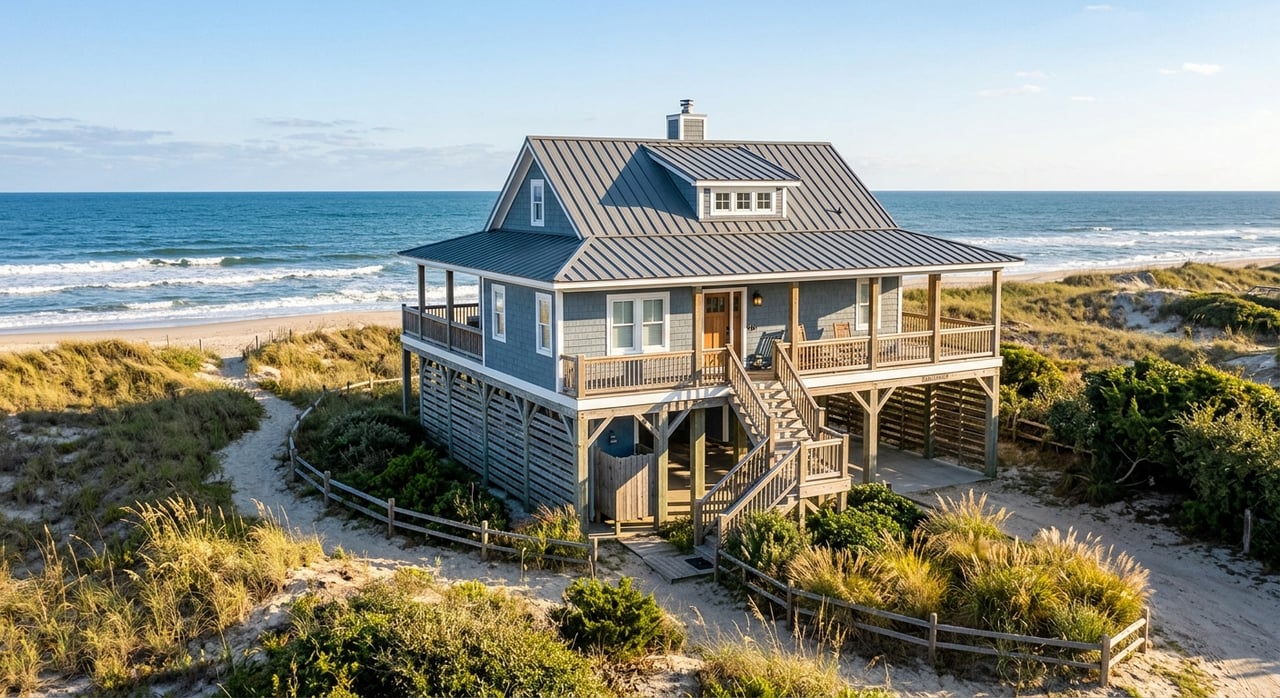
What to Know About Flagler Beach Oceanfront Homes
July 9, 2026
July 9, 2026
Dreaming about waking up to the Atlantic in Flagler Beach? Oceanfront living here can be rewarding, but it comes with details many relocators do not see at first glance. If you are moving from out of area, this guide will help you understand how Flagler Beach oceanfront ownership really works, from lot lines and beach access to flood exposure and long-term upkeep. Let’s dive in.
Flagler Beach is not a brand-new coastal community built from one master plan. The city describes itself as committed to preserving its old Florida heritage and small-town charm, and its housing pattern reflects that longer history. For you as a buyer, that often means more variety in home age, lot shape, and construction style than you might expect in newer beach markets.
It also means the setting matters as much as the house. The city notes that Flagler Beach is vulnerable to flooding from both the Atlantic Ocean and the Intracoastal Waterway. When you buy here, you are choosing a lifestyle tied closely to the shoreline, the dune system, and the realities of coastal exposure.
One of the most important questions for any oceanfront purchase is whether the property sits seaward of the Coastal Construction Control Line, often called the CCCL. In Flagler County, a permit from the Florida Department of Environmental Protection is required to alter, excavate, or construct seaward of that line. That can affect future plans for additions, site work, and certain exterior improvements.
If you are relocating from inland Florida or another state, this is often a surprise. A home that looks move-in ready today may come with tighter rules tomorrow if you want to remodel or rebuild. That is why lot-level due diligence matters just as much as the home tour.
Flagler Beach is not a place where every lot follows a neat suburban template. City land-development rules allow for irregular lots and combined lots of record, and they include special setback treatment along the A1A and Oceanshore Boulevard corridor. In practice, that suggests buyers should be prepared for narrow parcels, unusual lot lines, or properties created from more than one legal lot.
This matters because lot shape influences setbacks, buildable area, parking layout, and renovation potential. A property with a great view may still need a closer review if your long-term goal is expansion or redevelopment.
Flagler Beach has a more layered architectural character than many relocators expect. City planning materials reference Old Florida vernacular and Key West style, and the city emphasizes preserving its old Florida heritage. As a result, the oceanfront market often includes older cottages, modest coastal homes, and later rebuilds or renovations instead of one uniform style.
That variety can be a strength if you want character and individuality. It also means two homes on the same stretch of shoreline may differ significantly in age, elevation, materials, and resilience features. A polished showing does not always tell you how a home compares structurally to nearby properties.
Flagler Beach offers a more public shoreline experience than some oceanfront buyers expect. The city lists five public vehicular parking lots, and official visitor information notes multiple street beach access points. In the southern one-third of the county shoreline, within the City of Flagler Beach, public beach access is especially extensive.
For you, that means proximity to the beach does not necessarily mean a private beach atmosphere. Your day-to-day experience may include nearby walkovers, public parking patterns, and regular visitor use depending on the block.
Beach access in Flagler Beach is closely tied to dune protection. Flagler County advises residents and visitors to avoid walking, parking, or driving on grass or plants on the east side of A1A and to use only approved stairs and access points. That protects the dune system, which plays a key role in how the shoreline responds to storms.
For buyers, this is more than a rule to remember. It affects how you and your guests move between the house and the sand, how the property feels in daily use, and what kind of direct beach experience you should realistically expect.
If you are planning for frequent guests, retirement living, or multigenerational visits, practical beach access details matter. Official visitor information notes a handicap ramp at the pier and accessibility support at Gamble Rogers State Park. It also states that lifeguards are on duty on weekends from October through May and every day between Memorial Day and Labor Day from North 9th Street to South 9th Street.
Those details can shape how convenient and comfortable the beach lifestyle feels over time. Oceanfront ownership is not just about the view from your living room. It is also about how easily you, your family, and your visitors can enjoy the coast day after day.
Some relocators begin their search thinking oceanfront is the obvious choice, then realize their lifestyle might fit better elsewhere in Flagler Beach. Oceanfront homes offer stronger surf views and easier walk-on beach access, but they also come with greater exposure to wind, salt air, erosion, and storm disruption. That tradeoff is central to the decision.
Intracoastal or marsh-side properties offer a different kind of waterfront living. County amenities like Moody Boat Launch, Betty Steflik Preserve, and River to Sea Preserve highlight the boating, paddling, and estuary side of the local lifestyle. If your priority is water access without living directly on the surf line, those settings may deserve a closer look.
It is also important not to oversimplify the risk question. The city states that Flagler Beach is vulnerable to flooding from both the ocean and the Intracoastal Waterway. In other words, the choice is usually about the mix of exposure, access, privacy, and maintenance that best fits your goals, not a simple oceanfront versus safe inland comparison.
In Florida, flood insurance is often a separate line item from your main homeowners policy. The Florida consumer insurance guide says most homeowners policies exclude flood damage, and flood coverage is available through the National Flood Insurance Program or private insurers. For an oceanfront buyer, that makes early insurance review essential.
Do not wait until you are under contract to start asking questions. Premiums, coverage structure, and lender requirements can affect your comfort level with a property just as much as the asking price.
Florida’s consumer insurance guidance also notes that homeowners policies generally cover windstorm, hurricanes, and hail unless specifically excluded, and that a hurricane deductible usually applies in a hurricane claim. That means two policies with similar premiums may feel very different when you look closely at deductibles, exclusions, and limits.
If you are comparing properties, make space in your budget review for a true insurance comparison. The headline premium is only part of the ownership picture.
Older oceanfront homes can be especially appealing in Flagler Beach because of their charm and location. But after damage or during major renovation, older properties may trigger ordinance-or-law and code-compliance costs. Florida’s consumer guide notes that ordinance-or-law coverage may help with demolition and rebuilding to current code after a major loss.
That is a major budget point if you are considering an older cottage or a home that may need updating. In a coastal market with a mix of legacy homes and newer rebuilds, understanding replacement value and code exposure is critical.
The city’s coastal construction rules are intended to reduce the harmful effects of hurricanes and other natural disasters along Atlantic-facing areas. City code states that buildings and structures seaward of the CCCL must comply with more restrictive state coastal building standards. As a buyer, you should expect coastal-hardening features to matter more here than they would in an inland neighborhood.
The city’s wind-mitigation information points to practical features such as shutters, impact-resistant glazing, hurricane clips and straps, and secure anchoring. Even if a home is beautiful and well maintained, it is worth asking how it performs in a coastal environment and what upgrades may be needed over time.
When you are relocating, the fastest way to feel confident is to stay focused on the details that truly affect ownership. In Flagler Beach, these are some of the most important questions to answer early:
The city’s Planning, Building & Engineering division handles floodplain management, elevation certificates, and flood-zone areas, making it an important checkpoint during due diligence. For relocators, that extra review can make the difference between a home that simply looks attractive and one that truly fits your long-term plans.
Flagler Beach oceanfront buying is highly specific. The appeal is easy to understand: public shoreline access, established beach-town character, varied architecture, and a lifestyle that feels authentic to this stretch of Flagler County. But the best purchase decisions here usually come from looking beyond finishes and focusing on lot conditions, access patterns, resilience, and ownership costs.
If you are relocating, having a local advisor can help you sort through those tradeoffs with more clarity. The right home is not just the one with the best photo or biggest view. It is the one that aligns with how you want to live, what you want to maintain, and how confidently you want to own on the coast.
If you are considering an oceanfront move in Flagler Beach, Goodman Group Luxury Real Estate can help you evaluate the lifestyle, property details, and local nuances that matter most.
Stay up to date on the latest real estate trends.
My goal is to not only meet but exceed expectations, ensuring that each real estate journey is as rewarding and stress-free as possible. I am dedicated to providing top-notch service that goes above and beyond. Get in touch today to experience a seamless and fulfilling real estate journey.
4440 N Ocean Shore Blvd, Suite 101 Palm Coast, FL 32137